Episode Transcript
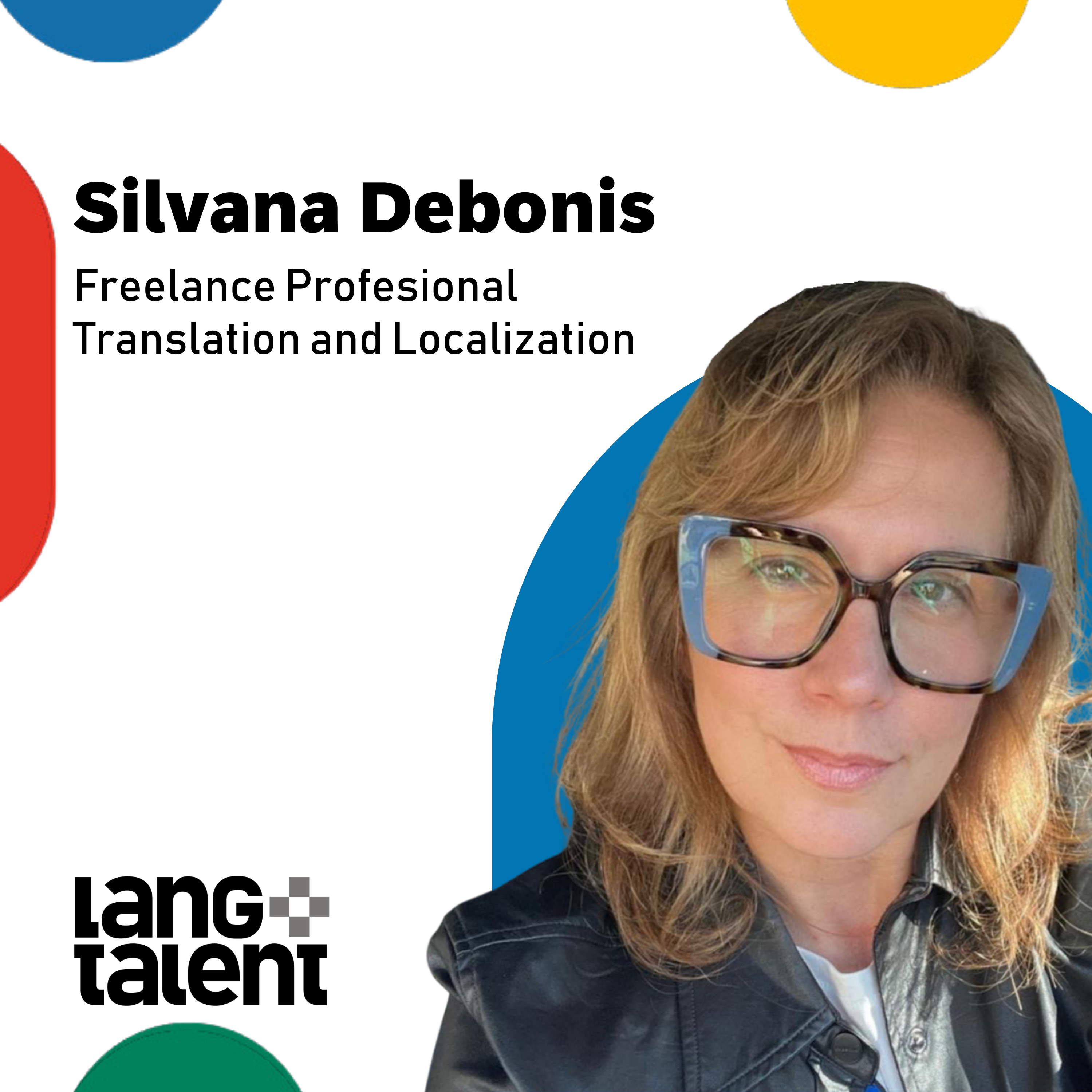
[00:00:05] Speaker A: Welcome to Lang Talent, the podcast by Multilingual Media, exploring the human side of the language industry and the future of work. I'm Eddie Arrieta, CEO at Multilingual Media. Today's conversation centers on one of the most urgent questions facing our field. How should translator training change to meet the realities of an AI shaped profession? Our guest, Silvana DeBonis, brings a rare combination of perspectives to this topic. She's a freelance translator, university professor, writer, and director of a master's program in translation, while also holding a master's degree in generative artificial intelligence. This episode explores what translation education must become if it is to prepare professionals not for the past, but for the future. Silvana, welcome and thank you for being here.
[00:00:54] Speaker B: Thank you, Eddie. Thank you for the invitation.
I'm so pleased to be here with you today.
[00:00:59] Speaker A: Thank you, Silvana. And I think one of the things the listeners should know is that I saw Silvana's presentation at ATA 66, and I was happily surprised that someone was already thinking about how should we get ready for the future? How should people think practically about it? Because we were always thinking, thinking about these aspirational ideas of like, oh, you need to reinvent yourself. Yeah, but how. Oh, you need to do these other things, but how do we go about it? What is the first step we should take? But, Silvana, before we get into all of that, is there anything you'd like to add about what you do and who you are that we should know about today?
[00:01:41] Speaker B: Well, your presentation was quite descriptive, but I suppose that on a personal side, I would like to describe myself as a curious spirit.
And that is what has brought me to many fields and many things that I never knew that were there. And I think that my curiosity is part of my.
My career or what I have done with my career.
[00:02:05] Speaker A: And that's probably what has taken you into this path of looking into how artificial intelligence will help transform the translation profession. And why don't we get started there? How do you see the future of translation as a profession? Which is, I guess, the big question these days.
[00:02:22] Speaker B: Wow. Yes.
The other day I was speaking with a professor and I was telling.
The point is that I believe translator, the future of translation lies in those translators who are willing to step out of the passive role.
I believe that so far we thought that, okay, being a translator was being linguistically sound, being prepared and sitting on a. I mean, at our desk, waiting for things to happen, for people to look for our work and manage our work and tell us what we were supposed to do. Well, I Believe that with this new AI in, you know, incorporation in our life, things have changed. Because that is exactly what the AI does.
You tell the AI what they're supposed to do, how you want it, and they do it. So we need to redefine ourselves. We need to take an active role. And when I mean an active role, I'm not saying, of course we have to check the specialization, which I believe is fundamental, it's important. But I'm talking about more than that. I'm talking about attitude.
I think that we have to master managerial capabilities.
The translator, the new translator needs different skills besides linguistic soundness. I mean, of course, linguistic knowledge and everything in a specialization. They all add. They all add. But we need to take an active role. We need to know how to manage workflows. We need to know.
We need to execute, but not only execute, the instructions of someone else. We need to be able to advise. We need to be able to make decisions, informed decisions with criteria, with judgment. While I believe that's the key, and thank you.
[00:04:20] Speaker A: And of course, a lot of the mindset needs to also come with some of the hard skills. You have a master's degree in Generative Artificial Intelligence. You forgive him, but you must be the first cohort of that master's degree. Because to get a master's at least two years.
[00:04:37] Speaker B: First or the second.
[00:04:38] Speaker A: Yes, yes, at least the first or second one. How has that changed the way you understand both the present and the future of translation?
[00:04:48] Speaker B: Well, a lot, because I could see. Well, the first thing that I did, I did it because I said, okay, what is this? I mean, my curiosity took me there and said, what are we talking about?
And I wanted to know what was, you know, behind that, behind what I was. You know, it's interesting because I met officially a generative AI when it was launched because my son, who was 13 years old at that time and who is a high techie, brought it to me. And I couldn't believe what I was seeing and what I was listening.
And I think that immediately I said, okay, I want to know what this is all about. And first of all, what I see is I could see what it does well and where the risks lie, where ambiguity, news, nuances, and everything may be a hindrance of an obstacle. I could see that the AI is a very good executor, and I think it's a wonderful help to optimize workflows. But still, at least in translation, there's a lot that lies in the professional.
Of course, we are not doing the same thing. And will not be doing the same things that we used to do. And this is the part that we have to learn how to accept, because many people were trained to do something that now they're not going to do in the same way, at least.
And I think that they are mourning and they are trying to adapt. Some of them are not adapting because this is not. And this is also acceptable. I mean, maybe you don't want to do that. So what the generative AI master gave me is a perspective of what is there, what it can do, and most important, what we need to do with translators and how we need to train them to work with AI, not against AI.
[00:06:45] Speaker A: And I guess that's the biggest thing, right? And you've talked a little bit about the change in mentality, the change in that, you know, attitude towards the technologies that we have available. And then you mentioned how surprised you were when you first came across this and you were like, oh my gosh, what is this? And of course, now with your understanding, I know a little bit about the presentation at ADA 66, but what do you think students need to understand beyond the tools? And you've talked about the attitude, but about judgment, responsibility, and professional identity as a translator.
[00:07:21] Speaker B: When we're talking about the graduate studies, which was. The presentation that you attended was about graduate studies. And if you remember, there was a picture of someone playing chess.
And I said, I don't want the translator to be the pieces on the board. I want the translator to be the hand that is moving the pieces.
So basically what I propose and what I'm trying to tell my colleagues, professors to do is, okay, let's help. Let's teach our students how they can master the technology, how they can use it to their advantage, not being subject to the technology. I mean, machine translation, post editing is a reality. But if we are going to train translators just to be machine translators, post editors, we are done.
That's not the perspective. I mean, they should see that there's more than just checking what the AI has done, judging when it's important, when it is useful to use it, or not judging what type of LLM or slm. We need training, a small language model, perhaps in the future to make processes faster and being in control. There are many things that the translators may do, but they need to learn how to do it.
So I believe that's where our big challenge lies today. We need to change programs because the change in abilities or competences should come with the change in how we teach and how we prepare the translators.
[00:09:11] Speaker A: And Silvana if you allow me to stop here, a little bit about this conversation on the professional identity and the translator identity and I know this is a question that many have not answered yet, but there are many different types of translators and some might be able to use these tools. Other types of translators, translations we know might not be able to use these tools. Do you see as generative AI, kind of like exploded new types of translators needed to emerge. And do you think the younger generations are more open and flexible to go in that direction?
[00:09:49] Speaker B: Yes, definitely. I believe that the young, I mean young translators have already embraced it and they are being able to adapt to even as I said, to even new positions. Something that was always striking is when you talk to someone, for instance, abroad and you said, ah, yes, I'm now in the translation field. I used to be a finance official in bank, but then I changed because. Or I studied sociology, but then I did a master in I don't know what. And then now I'm trading cryptocurrency. Okay. I said, why a translator cannot change what they do? Why are they just need to be stuck in front of a computer, you know, typing, why they can't do something else in communications? And okay, I believe that's where our challenge lies. Young generations are open to that. It's like they are now. They've got the chip and they know that they need to change. I mean that what was in the past is no longer effect.
The point is what happens with middle aged translators who need to transition in the process. And that's also something that we need to think of because there are a lot of people who are really valuable, but they, we need to help them transition. And that comes the idea of masters who help them transition. You know, these young generations are, yes, of course, they are prepared and they, I believe they are suited. And if we change our plans, they will be suited to take different positions and do many other things. I have met translators, young translators who are specialized in ux, which is user experience writing, and that's not translating. But you need a lot of the skills that you acquired when you were a translator. So you see, there are many potential things that we may do, but we need to change the mindset and prepare them, of course.
[00:11:51] Speaker A: And it might become a societal challenge when we think about that phrase that says we stand in the shoulders of giants. When we looked into the future and we can't forget where the foundation of the current translation environment and language industry is set upon, which is the amazing work that thousands of translators over decades have done and the training that the machines have taken. It's similar to that conversation on like, hey, you're taking all of the information from the New York Times, from Multilingual magazine, from the New Yorker to train all these models, and then pretend that that wasn't the case. Pretend that it just happened. Because we have a great algorithm and there seems to be a responsibility that we need to take to make sure that some of those transitions happen, but that we find the place where the value of the knowledge and the experience comes from. And I think that came across in your presentation. There is a value into having that sensitivity, right? That cultural sensitivity, that contextual sensitivity.
[00:12:53] Speaker B: Totally. I think that we are there to add value.
There was another presentation.
I made a presentation in Geneva in transcript conference. Transcript conference. And at that time, what I said is, this is the end of the generalist. This is what we can say. I mean, the AI may replace generalists. I mean, there are a lot of things that we don't need translators for anymore. That's part of evolution. Yes, we need translators who add value, whether because they are specialized in a field and they know that very well, because they are cultural, culturally aware of many things, because they manage gender or they manage in multi, they have worked in multinational international organizations, and they know about a topic. I mean, we need to add value where you cannot add value. Okay, that's. That's it. Okay. Unfortunately.
But this has happened to many professions. It's not something that happens to us.
What? I believe it's the end of that type of translator or translation that's there. That's the end. And we need to accept it and transform.
[00:14:07] Speaker A: You know, that is a really great way to put it. Silvana, the end of the generalist. It's a great way to put it because in many ways, humans were generalists of many different things. Like you said, this is not the only profession where generalism was the norm.
It was the norm.
[00:14:23] Speaker B: Think of accountants. Think of accountants. I think that they are worse than us, because at least we manage sensitivity. We manage nuances.
I mean, accountants manage numbers, I tell you. But then again. But if they are specialized, if they have certain added value, okay, they will need also to redefine their professions.
[00:14:46] Speaker A: That is fantastic. And interestingly enough, it seems like technology has been the trigger for many of these places where the transformations have taken place. And those who are truly passionate about the craft, then finding the tool, a way to amplify that craft and a way to empower themselves into what the next challenges will be. This is very Interesting, Silvana. And of course, you've recently taken on a new role as a director of a master's program.
Tell us a little bit about the program. Tell us a little bit about what you are expecting.
[00:15:18] Speaker B: Well, I have just. I have just started.
I have just started, but we have already been discussing of changes. Okay, definitely a master's degree.
I took this position in the Universidad in Argentina. It's a master that has been running for 20 years with a lot of prestige, great professors, and really very, very good graduate professionals.
Now, again, we need to start thinking of how we are going to change the program in a way that we can add all these elements or tools that translators will need to face new reality. Basically, as I was saying, to change from a passive to an active role in business.
That's the idea.
And to do that, you need a lot of things that we were not trained to do, we were not taught. And then we will need to acquire those competencies, abilities, skills, however you want to call it that we need them. And I suppose that that's the goal where we are. I cannot say much more than that because I'm just working on a proposal. But I believe that we will be adding many, many things that are. So far, no master has, of course.
[00:16:40] Speaker A: And I think it seems like you are the right person to jump on that challenge. Silvana, There seems to be a need for a balance between, you know, the new technologies, because they are changing rapidly. By the time you are including something into an academic profile, then all of a sudden you might need to adapt. How do you look into that, into that balance of like new technologies coming up and, you know, the students hunger for. For new things, but also understanding that there are sets of information and knowledge from previous experiences that need to still be taught how, how to balance.
[00:17:16] Speaker B: Well, I think that that's what is the challenge thing here. Because as I said, I don't want translators. And this is what I said in my presentation. I don't want translators to be machine translation post editors and that's it. Because that is the end of our profession that will be at the end. I mean, so we need to prepare them better than ever.
But give them what I call flexibility through crisis management and many things that are. That help them to.
I mean, I should. I think that there should be a subject on real experience on things that, you know, where you have a project, give them the.
Giving them translators a project, face them with obstacles, with things that they will need to learn that are not taught in class where they have to. So they Learn how to overcome, you know, challenges, difficulties.
Well, they need to be prepared because this will not stop.
We will be facing new things every day.
So there's not one course that will give you the key. I mean, it can open your mind. But you then need to change the way they face the profession, you know, without forgetting of the basis, which needs to be stronger than ever, Stronger than ever. And this is what they need. So that's why it's very important the professors or the instructor's position in the class.
I have changed a lot the way I teach. No more translation assignments for home. I mean, it doesn't make sense because you have no control of the knowledge process there.
So home is for other things, for other guided activities where they can explore technology, they can explore many things working together, teamwork assignments, different roles, many things that they will need to manage a project one at a time. But translation is something that will happen in class. You know, it's a different perspective, definitely.
[00:19:18] Speaker A: And of course, it seems like from your experience, many things have changed over the past few years into how translation is taught. Do you think artificial intelligence has been one of the most, if not the most revolutionary or disruptive change that has come to the translation profession as a whole?
[00:19:40] Speaker B: Yeah, I definitely think so.
Because of the thing that I was telling you. Because at the point it started doing what we were used to do, that was execute orders that someone else gave us when we were in our passive role.
And then first the client would call, then the client would send you an email. Now the client would send you WhatsApp, telling you, okay, I have this translation. I need you to do this and this. By that time, use data or maybe an agency telling you, use this translation tool and do the this and okay, this is something that now everything is told to the AI. So, okay, we are not executors anymore. We need to, you know, take ownership of the translation process. I would say that this is the key phrase, we need to take ownership of the translation process.
That doesn't mean we're not going to use AI, but we need to be again, the hand that moves the pieces on the chessboard.
You know, this is where we should aim.
[00:20:44] Speaker A: And this is a huge change in terms of gaining ownership over the process. And there are most. There are some certain things, and you've mentioned a few of those. But some things must change in the curricula if programs are to prepare students for the real world conditions. And I know you're working on your proposal. What are some of the things that you can Tell us that need to change in that program, that perhaps people wouldn't have seen them in the past few decades in a translation program.
[00:21:16] Speaker B: Well, management, I believe that we need a lot of ideas on management.
We will need to know about data. I mean data analysis, this is something that we cannot be out. I mean, if we want to work in groups where we can add value, we need to know what happens on the other side of AI. I mean, you cannot go on your life without knowing about. I think that now technology is just not using a CAT tool, is learning a little bit more than that. We need to go a little bit further, at least the ones who want to get ready. I don't think that this is for the graduate course, but this is for a postgraduate definitely.
[00:21:53] Speaker A: And of course you're going into data. And I cannot avoid asking a question about it, you know, as we are translators and those that are translators, I'm talking here figuratively, as we are translators. When we're looking at the data, what are we looking for? Are we looking for mistake identification? Are we looking for.
Are we looking for cultural resonance?
How do we find in the data the things that we do?
[00:22:26] Speaker B: When I talk about data, what I mean is how things are created on the other side, what is the backstage of the models? I think that my opinion, this is something that I believe. I mean, we are all working now with talking about large language models. But the future is not that. The future is a small language models. Small language models that I believe companies will create for their own benefit and or universities. And I think that translators should be there because small language models will be trained and the experts who are the experts, those who know the language.
I mean, not only translators, there are many other linguistic experts who are also important and valuable. But translators, we have a lot. I mean, we have something to say there.
So I'm talking more about small language models where nuances the way the models are trained because they need to be effective and efficient for the purpose that they are created.
So I think that. And it's not only for translation. I mean they would maybe use for other things where our competence, our knowledge, linguistic knowledge is important not only for translation.
[00:23:41] Speaker A: And of course you bring an amazing point about the small language models. It seems like always, and we've heard this from the very beginning in the conversation about artificial intelligence. They will always tell you something like it always comes back to the training data. And then we're coming to an end to the training data. And then companies are starting to realize that there is huge value that that's the new goal, that's the new oil, which is the.
Even Mark Cuban said, I would be very careful with companies that are just posting their information out there completely free, with no gating, with no way to track who's taking that information.
Because it takes a lot of time to get information out there, to put knowledge out there, and then these models are just taking it. So when you talk about small language models, you're also talking about very small language model as compared to what people are thinking. And then similar to how we have translation models, memories for certain companies, confidentiality.
[00:24:43] Speaker B: I suppose the companies in the end will need to have their own small language models in their own servers that are protected. And so this is the future. And I think that translators should be prepared for that.
They should be ready to manage that, to understand.
Because if they don't understand, how can they add value to something that they don't know? How it works.
That's the important thing, you know?
[00:25:08] Speaker A: Yes. And Silvana, of course this is more on a personal note, but you are gonna be directing this new master's program, which means the response to this way of thinking that you have has been very positive. Also from the feedback from the ATA 66, we are talking here. Tell us about your students, Tell us about the people that you are putting to do some of these things. What is, what is the response that you're receiving? How was it at the beginning? How is it evolving? If there is anything that you can.
[00:25:39] Speaker B: Students are starting to understand the changes. I suppose that there's something very interesting. One of the activities in the last semester, I. One of the universities where I teach, I teach accounting translation. Translation in the accounting, financial reporting.
And then one of the things that it's very important besides understanding is language. Language, I mean, not only the word okay, how do you say asset or not? So how you can express things in a fluent way. So one day I said, I want you to make this research.
I told them what they had to research specifically was a language research. They had to. And they could use AI.
So when they came, I said, okay. I distributed papers, they all use their computers. I said, no, no, close your computers because you're going to work with the clause with the clothes. So yes, yes, of course, that was a text that was about accounting and there were spaces that were missing and they had to put a word that made sense there. And it had to do with what they had been researching. And they said, well, what are we doing here?
You're showing me that you understood what you were Doing, I mean, if you can complete, that means that you will be able to translate, that you will be able to post edit if something goes wrong. Because it was very Argentine terminology.
There are many things that in accounting we say in a different way, some biases. And so it was interesting that they learned them in order to translate into English.
And so these are the type of things that I do. At the beginning, they were shocked, and then they got used and they understood why I was doing it. And I believe that when they understand why, they are even thankful because they believe that, okay, this person is really worried about my future.
As I always tell them, I have done my life, I've been translator for 30 years. Everything that I'm doing is because I love the profession and I don't want it to disappear.
And I want my students to be able to enjoy the profession. Perhaps not the same because it's changing, but to enjoy what they have studied for.
And, well, these are the type of things that at the beginning you found, like, this woman is crazy to, oh, I love it. I want to be your assistant next year when I get the degree. So that's wonderful to me. You know, it's from the shocked phase two. I understand what you're doing. I like it, and I want to be with you. That's great.
[00:28:21] Speaker A: And I have a question that, you know, has come across many places, and for some, the answer might vary.
Would you recommend people that say, I really want to be a translator. Would you recommend to them that they go into the profession? And what would you tell them? What would you tell those that are thinking about it right now?
[00:28:41] Speaker B: Yes, definitely. Definitely. And I would love to make a podcast for parents, because many times people, I mean, there are a lot of young people who want to become translators, and their parents are telling me, I know, but you know, and they don't. Nothing. I mean, things are changing. But we can get and prepare translators who take ownership, who may be managers of companies, who knows, you know, there are many things that they can do. The profession has changed. We need to, you know, go with the profession and help them become translators and whatever else they can be.
[00:29:20] Speaker A: That is fantastic. And of course, I'm going to go with that line of the end of translation generalism.
It's here I really love bad.
[00:29:30] Speaker B: Yes, yes. And take ownership. Take ownership.
Take ownership. I think that that's important because this is part of getting out of the passive role.
[00:29:38] Speaker A: Absolutely, absolutely. Silvana, you're also a writer.
[00:29:42] Speaker B: Yes.
[00:29:44] Speaker A: What are you working on? What have you worked on?
[00:29:48] Speaker B: My first Two books were about glossaries. Because I love terminology now I started.
I don't know if you know substack. Substack is a. Well, I started writing there some articles that have to do with translation, but it's not only for translators. It's also for professionals who need to interact in other languages in order to be able to use proper terminology.
And I'm writing currently a book on the book is a series of articles talking about strategic decisions that translators should make when they are translating.
So there is part that talks about geopolitics and economics and how understanding geopolitics can help you make a better translation of an economic term.
Another part, of course, is devoted to the crypto world with all the new things that are appearing.
There is another that is related to multilateral organizations and concepts that have to do with like ownership or governance or many other things. So it mixes my love for terminology with the strategic role of the translator that where AI cannot replace us.
[00:31:07] Speaker A: And surely this should help not only our industry, but many other industries understand how that transformation is taking place. I think we're very fortunate in the language services industry to be kind of like at the center of the conversation and be very ultra aware because of the type of collective intelligence the industry has. We're at the very center and there's so much knowledge and perspectives going across that allows for this. For this to happen. Where can we find your books? How can we get across your information?
[00:31:42] Speaker B: Well, my two books were. The first two books were published by Editorial La Ley, which is part of Thomson Reuters, but also the Colegio de Trautores de Buenos Aires sells it. Sometimes it's easier to go through them because they have a very good library and the bookstore. I'm sorry, they have a library and a bookstore now, and the bookstore also ships abroad.
And the other one, it's on the making. And once it is published, I will let you know.
[00:32:08] Speaker A: All right, thank you. Thank you so much, Silvana. It's of course been a pleasure to talk to you. You know, Multilingual is open to receive your articles and your insights.
[00:32:18] Speaker B: Okay, thank you.
[00:32:19] Speaker A: We will have another conversation later this year to see how the master's program is going, how the curricula is going, what the feedback it is, and the invitation is already there. Before we go, is there anything else you like to add?
Any message for translators out there? Any message for those thinking about translation?
[00:32:38] Speaker B: Yeah, there's future. There's future for us. The future is not the same as the past. Evolution. That's what they call. And we need to make, I mean, to accept evolution. And for new translators or young translators, I think that they were born with that in mind. And for those who are my age or a little bit younger, but we are there in the middle aged zone, don't be scared, don't be afraid to make the transition because there's a lot that we can do and there's a lot that we can contribute to the industry.
[00:33:12] Speaker A: Thank you very much, Silvana. Because this applies to the individuals, but of course, needless to say, it applies to the companies that are comprised by those individuals. And the transformation of those individuals will translate into the transformation of their organizations and our society as a whole. Savannah, thank you so much.
[00:33:30] Speaker B: Okay. Thank you, Eddie. It was a great pleasure to be here, of course.
[00:33:34] Speaker A: And for those that are listening to Lang talent, thank you so much for listening to us today. Once again, a huge thanks to Silvana DeBonis for helping us rethink what translator training must become in a world shaped by AI complexity and constant change. Her work reminds us that education is not about preserving old roles. It's about preparing professionals to think, to adapt, and to take responsibility in new ones. Catch new episodes on Spotify, Apple Podcasts and YouTube. Subscribe rate and leave a review so others can find the show. Once again, I'm Eddie Arrieta with Multilingual Media. Thanks for joining us and we'll see you next time. Goodbye.