Episode Transcript
[00:00:02] Speaker A: Lang Talent is supported by Global Search rc Translating recruitment into results.
[00:00:08] Speaker B: Hello.
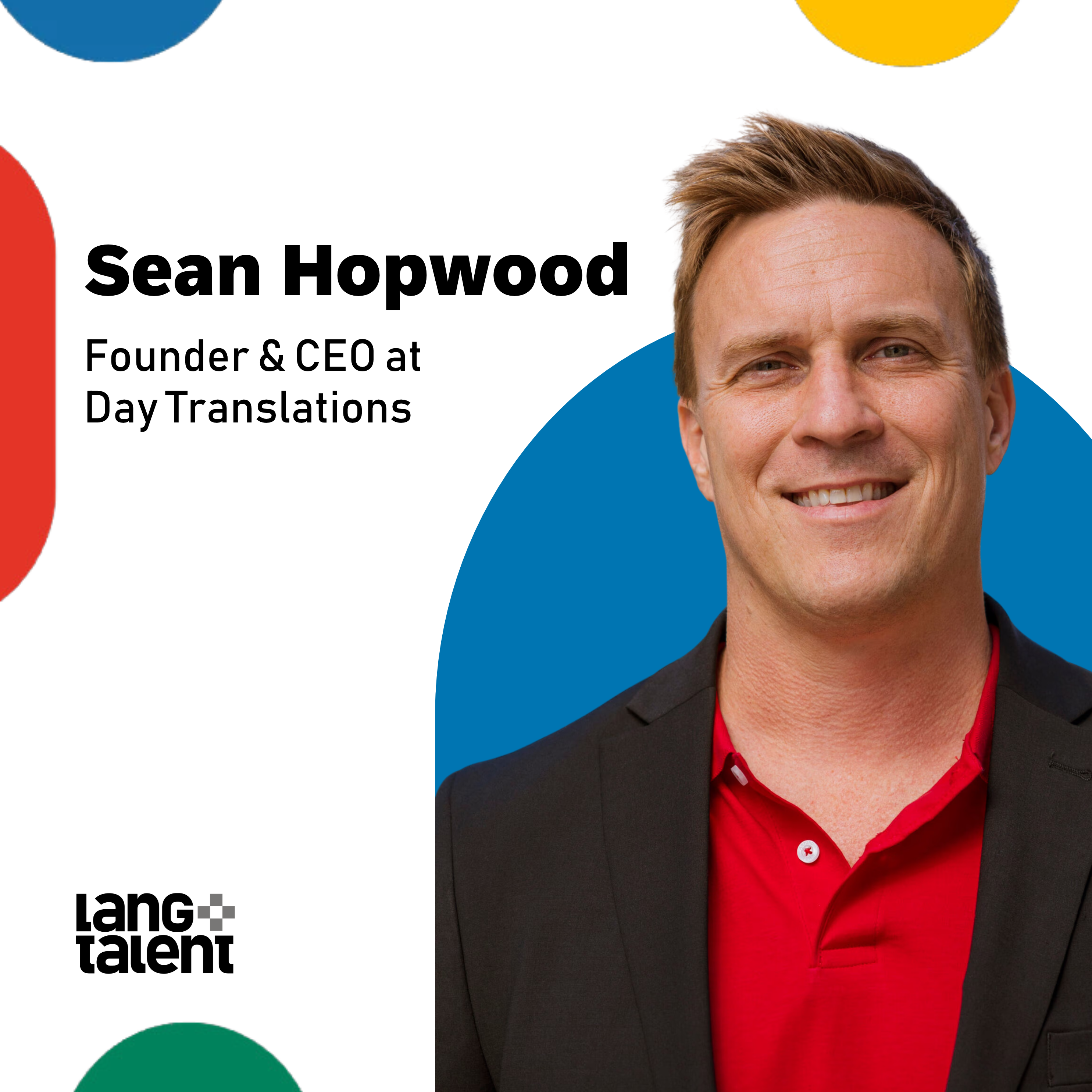
[00:00:08] Speaker A: Hello and welcome once again to another edition of LANGD Talent. This is the podcast where we talk about the future of work, where we talk about talent, where we talk with amazing professionals who inspire us to do better and we get to know what they do, what their companies do, and perhaps inspire us to do better for ourselves. Today we are with Sean Hubwood, founder and CEO at Day Translations. A polyglot, a lover of languages, a lover, a lover of cultures. And of course, I will let him tell us more about who he is and what we are about to do here today. Sean, thank you so much for doing this today and welcome to Lang Talent.
[00:00:50] Speaker B: Thank you for welcoming me. I'm so happy to be here and it's very nice to meet you. I'm here. I love to talk about languages, translation and anything else your audience wants to talk about.
[00:01:00] Speaker A: And Sean, you know, I'm really excited to see a polyglot, a true one. Why don't you tell us a little bit about your story? Of course, we start with one language in our lives and then, you know, slowly you start getting involved with other languages.
How's your story with languages?
[00:01:17] Speaker B: Oh, thanks for asking. I mean, that is something I'm extremely passionate about. It started when I was really, really young, like 7 years old. I lived in a neighborhood that was, had a predominantly Hispanic, a lot of Hispanic people, Mexican people, some Puerto Rican people. And they would always speak to each other in, you know, in Spanish. And little by little I started to pick up on the things that were saying and, and I, I started to listen to the music. You know, in Mexico they started, they listened to a lot of cumbia and I was like, I really like that music. So I got into it and then one day they were like, we were dancing together and then they said, and I said, I know what you're saying.
And I was like 7 years old. And that just that understanding and starting to understand others just hooked me. I just wanted to, you know, I just wanted to start learning other languages. Even when I was like just nine years old, I went to a camp. My grandfather was an amazing person. He sent me into a camp and there was some people from Pakistan there and there was a girl who spoke Urdu and I wanted to learn and I asked her to teach me word every day. I, I don't know where it came from, but I just, I just wanted to learn these languages. There was, I had an Italian friend when I was 10 who would teach me Italian words and it just. It just grew from there more and more, and it's just addictive. I love it. I love understanding people. I love, you know, knowing where they're coming from, and I love the look that they have on their face when you kind of say a word in their language or say, you know, something about them. It just. It opens them up and. And I love it.
[00:02:53] Speaker A: Thank you very much. And I hope our audience gets to understand a little bit more about the life of someone who loves languages. And I have some questions because my children are loving languages and learning languages as well. Before we get there today, we're gonna get an inside look at how global language company thinks about its people, the culture it wants to build, why the team is growing, and what it will be looking for in the next generation of talent. Like I said. Shaun Hubw, polyglot entrepreneur, Global language strategist founder once again of day Translation Sean founded the company in 2007 around the belief that language access is a human right. Today, its global network includes thousands of linguists working across hundreds of languages and supporting everything from corporate communications to legal, medical, government, and humanitarian work. With data translations continuing to work to grow, we want to understand what that growth means for. For the people behind the company and for professionals who might want to become part of it. And Sean, for you, languages, did it become easy? Because I know for some people, it's just really easy to just pick up languages. And do you think it's like a natural talent, or did it also involve a lot of discipline and just putting yourself every day in front of languages?
[00:04:18] Speaker B: Well, I think what makes it easy is the love for it, because I actually wasn't so easy. But if you think about the amount of hours that I put in to learning the language, it wasn't easy. I mean, even with Spanish, I spent like seven, eight years straight studying Spanish. You know, like I was telling you, I went to Colombia, I went to Spain, I went to Mexico, you know, I went to Puerto Rico.
I practiced in all these different places. Plus Florida, which has a lot of people who speak Spanish, you know, and then you get into the nuances, the way that you pronounce things, the way you have to improve even the slightest little things, like, you know, the sound of the D in Spanish is different than the sound of D here. But some people wouldn't even pick up on that. It's not day, it's de. You know, it's just a slight little de.
So, I mean, these things, I mean, it takes a while, you know, and for example, I'VE been studying Chinese for five years now and I'm not even close to being fluent in Chinese. So it's definitely hard. I. I'm not like, it's not some type of magic where I can learn a language. It's like every day I. I'm going, you know, I'm going back home. I'm. I'm going on my phone, I'm. I'm listening to, you know, languages in different songs in different languages.
You know, I'm actually taking courses in Mandarin, you know, right now. So I mean, it's, it's definitely not something that comes to me easily, but it's something that I love. Kind of like someone who's really good at the guitar. I'm pretty sure they put a lot of hours into learning how to play it because they love it. So the love makes it easy and you know, but it's hard, but loving something makes it easier.
[00:05:56] Speaker A: Oh, thank you for sharing that. And I myself try to spend some time every day to learn a little bit more of French in my case, but it hasn't come easy. I did some French at school. My children are trying to do different languages too. I love it.
And just the different sounds to me, what attracts me of certain languages is how it sounds, sounds.
So it sounds like beautiful. Yes, French is beautiful. Japanese also, the way it sounds is very attractive to me. I went to New Zealand and they speak Maori there, some of the Maoris. And very interesting too, also how it sounds. This phonetic language is of course easier to read than to speak. But I'm really glad that you are sharing your stories. And of course my immediate question is, what do you think is the effect that languages have had in the way you view the world and the way in which you work as an entrepreneur?
Is there any relation you see there?
[00:06:58] Speaker B: Definitely, definitely. And it's kind of hard to explain because some people you understand because you speak a few languages and I speak a few languages as well to varying degrees, 7, 8 languages, varying levels of fluency. But. But you start to understand the way people see things is so different. And it's like you become the opposite of a narcissist. You'd be like, you know, narcissist is in his own world and sees things only one certain way. When you speak all these languages, you become like more paragon in the way that you see things.
You become more open minded and kind of like when you see things in a certain way and you're able to understand people, it really is good. And as a linguist or as an interpreter, as it used to be, and I still do interpreting. Sometimes you kind of, like, find yourself, like, bending a lot to other people. You like, you change your ways a little bit to this person or that person, and, you know, it's good in a way, but also you kind of want people to.
When you meet someone who's trying to understand your own culture, I get that feeling. I'm like, wow, this is. This is a good feeling when someone's trying to understand my culture. You know, I come from Florida. You know, we have certain culture here, Florida, in the United States. And when people try to understand that, it makes me happy. So I understand how other people feel when I'm always trying to understand their language and their culture and where they're coming from. And it's great.
It's what I like. It's what I live for, you know, So I love it. I think I answered the question.
[00:08:27] Speaker A: Yes, of course. Of course. Of course you did, Sean. And Sean. And thank you for sharing your experience.
Of course. Like we said, nearly two decades working with people, and I really loved hearing that you're not a narcissist and that you like to, you know, look at others. And of course, as you're learning languages, it creates a specific and special sensitivity towards the talent that you are working with. What can you tell us about what you've learned about people and talent that perhaps you didn't understand when you first started Day translations?
[00:08:58] Speaker B: Well, that's. That's interesting. When I started the company, I mean, I just was working by myself, and I. I didn't realize I would have to work with so many different people from so many different, you know, backgrounds. You know, there's people in. When you work with translators, you literally have to work with people from every single country. You know, I mean, not just, you know, Latin America, but you have to work people from all of Asia, Africa, you know, Europe, stuff like that. So I learned that there's people who are motivated by different things. Some people, like me, want. I want to be the CEO I like. You know, I feel like I was built for this. I feel like I can handle it. You know, there's. I like to be, you know, organizing. I like to be leading, and I like to help other people grow. And there's other people who want to work with the company for the long term. They want to work with the company. They want to retire with the company.
We've had some people at our company who've been here for 19 years, and, you know, those people, you know, We've. There's something I'm really proud of, having some people who've been here for 19 years, a lot of people, not just a few. And, you know, it shows that I want to. I want to make a place where people want to stay and people want to grow with us. So that's something really important to me. And then there's other people who love to be translators because they love languages. Like me when I first started translating. I do like translating, but it is very, it can be very tedious, you know, sitting down there and, you know, fixing things, editing things and going like, like that.
And there's some people who want to be interpreters, and there's also some people who want to be designers or some people who love technology. We have a lot of tech in our company, you know, so you have to manage all those different types of people. And that's something that, you know, was really challenging to me. And it's still challenging after 19 years learning that there's, you know, people from all these different backgrounds and you have to speak to them in their love language. You know, maybe they're not motivated 100% by money. Maybe they're motivated by being able to spend time with their family and stuff like that. I mean, I've heard of people who used to work with, you know, OpenAI, who left the company because they were, you know, not really able to do what they wanted, you know, and they create, they, they, you know, they create little robots at home and they don't even make a lot of money. You know, there's people who are motivated by different things. And so once you learn by. About what people are motivated, Motivated by, then you can, you can give them what they want. And when you, when you, when they show, when you show them that, okay, I understand this is what you want, I'm going to give you what you want, and hey, this different person, I'm going to give you what you want and you create a harmonious place to work. And, and like I've said, that is something I actually love just as much as languages.
Making humans happy in a workplace. And that's something that. One of my biggest goals is making a workplace where people can actually be. Feel productive and happy. So that, that's something that I learned that I never thought that I was going to have to learn.
[00:11:50] Speaker A: And that, that is, that is great. I mean, and of course, as the team grows and how big is your team now?
[00:11:57] Speaker B: Well, Internally we have 50 people and the translators, you know, everyone could, you can count the Translators and interpreters, that would be thousands of people.
But internally we have about 50 people from, you know, project managers, cybersecurity people, developers, app developers, all different types of people. So it's about 50 people and it's been, it's been challenging to manage. But HR is really important. We have a strong HR team and we have strong leaders as well as just everybody. Everyone in our company is good. I mean we have the managers all the way from the top down are good. We've worked really hard on that.
Making sure that people are well trained and that people, you know how to speak to clients, people know how to, you know, provide, you know, different types of translations for different types of clients and make sure that it's perfect because you're not going to treat a medical translation the same way you treat a legal translation and you're definitely going to treat the tech translations a lot different when it comes to video gaming, when it comes to software, you know, so we have different departments and we speak to clients differently and, and it's been in, yeah, it's about 50 people and hope and we're continuing to grow. We've recently hired about seven people and we're continuing to grow.
[00:13:16] Speaker A: That, that is, that is, that is wonderful. And of can tell from what you're mentioning that there is a level of flexibility for those that want to be long term, those that want to do something for the time being. And of course that approach to hiring is very important to developing talent, to also retain the talent.
And how has things changed over the past 20 years? And I mean, especially in the last three years when things got a little crazy for Tom Rolls.
[00:13:43] Speaker B: Yeah, well, things have changed a lot, you know, and like originally, like, like I said, like I'm a language lover and I've had to learn to be more corporate, you know, and more business minded. And I do have an, I have a master's degree in business, you know, but I just, my love for languages has like usurped everything. It's just, it's this thing I'm really passionate about. Even now I, I speak to clients and I, I just, I just get so excited. But I mean it changed, you know, after.
Well, I started the company in 2007 and like in 2010, in the mid two 2010s, you have to, I had to start being more getting involved in things like machine translation and translation memory and working on those things like repetitions and making sure that the clients are, you know, that we're able to give cheaper things for the, you know, for the clients. You know, if a client has, you know, a, a million word document and there's like 50% repetitions, this is something I had never really gone into and something I hadn't really considered. You know, I just, like, we're just going to do everything 100% human. And then, you know, I, I slowly adapted to that. A little bit slower than some people because I, But I still, we still do a lot of, you know, people come to us because they like the, our human approach. And then of course, in the past three years, when you say when the AI stuff came out, you know, I am actually a very, you know, technological person. I do love technology. So I had, you know, I had been studying AI for, you know, over 10 years at that point. And we had, you know, we had been studying nlp, we had been studying, you know, AI workflows and stuff like that. So we were able to easily adapt to that. You know, we, we have a lot of processes. We have a, we have two apps in the App Store. One can do like, translation, it can do AI translation. Then we have another one that does interpreting and AI interpreting and stuff like that.
So these things are these, these types of technology. I mean, we're becoming more and more of a technology company with a very strong human approach.
And it's been, it's been a lot of adapting. And I know like CEOs, we always have to adapt to so many things and it almost gets like, oh my gosh, another thing. Like the. When, whenever they came out. I mean, I don't know if you remember when they were talking about the Internet of things.
I'm like, what does that mean? What does intern things? You know, like, what am I supposed to do? Am I supposed to adapt to this? Like, and then, then now. And then they come out and of course the COVID came out and we had to adapt to that and like how everyone changed and how a lot of things were going online and now this AI is coming out. It's like always something new, always some challenge, you know, as a CEO. And it's nice. It is nice. I would like a little bit of a break, but it is nice. It is fun to be a CEO because you always have to adapt to all these challenges. And luckily we've hired people who are able to adapt. So ye. I mean, the adapting, constant adapting. I mean, people always say, you know, you know, you have to adapt or you, you don't. You can't progress in life if you're not adapting and progressing. But yeah, it's It's. It's a skill that you must have adapting. I'm sure that something is going to come out in a couple years, you know, such as, you know, brain implants. You know, people are going to be putting chips in people's brains, and that's going to have to be, you know, what kind of translation technology is going to be in that? You know, it's like that could be in two or three years. So, I mean, it's just. You never know. You never know. There's always going to be new stuff. Of course, there's been a lot of successful brain implants for people with, you know, certain disabilities, which has been really nice. But, you know, it's those. Those implants are going to be progressing a lot, and we're going to have to monitor how. How. What's happening with those.
Yeah, I don't have any right now. I don't have any.
[00:17:37] Speaker A: I was thinking. I was thinking maybe all those seven languages. You want to get to 30 languages or something? I was working with my.
The. One of the Spider Man. Oh, no. Civil War. One of the Avengers movies. And they were talking about this winter. Soldiers speaking 30 languages. And I was like, oh, my gosh, that would be the dream. They're like, oh, these are, you know, the ultimate humans. They speak 30 languages. I'm like, oh, my gosh, they can adapt to any culture.
[00:18:01] Speaker B: I gotta watch that. I didn't know that if that's the case. I didn't watch that because I usually only watch movies that have a lot to do with languages. And my favorite movie is Arrival because it's about a woman who.
She's a scientist and she meets aliens. And the aliens.
Spoiler alert. I don't know, but the aliens revealed a language to her, and it's like a very. The language has power in it. So. Oh, yeah, it's a really cool movie.
[00:18:28] Speaker A: I will check it out.
[00:18:30] Speaker B: I'll check the Winter Soldier out.
[00:18:32] Speaker A: And it's just a reference that they make of the 30 languages. But I've kept a record in my head of, like, movie references to languages. So maybe we can write an article together about your favorite language movies.
We can talk about this at the very end of this conversation. You can give us a few recommendations for language movies.
[00:18:53] Speaker B: Oh, for sure. I would love to do that.
[00:18:55] Speaker A: Yeah. And you were talking about adaptation, and I think that's what we do best as human beings.
I do. I do remember part of my biggest adaptation has been moving to remote work.
And right before COVID I was very Lucky, because it happened right before COVID And then Covid hit. But I was already on the remote trend, so people were like, what is this remote work you do? You don't really work? And I was like, no, we have some things in place that allow us to do that. How has it been for day translations?
Have you moved towards a more distributed scenario, more remote work? And how do you make it work for your team?
[00:19:31] Speaker B: Yeah, that's interesting. There are some challenges with it, but there's, I think, a lot more benefits than challenges. Of course, everyone knows when you have remote work, you don't have to drive. You know, you save money on gas, and that's a big deal nowadays, you know, with the price of gas.
But, yeah, we, we have been remote for a very long time. Even way before COVID happened.
[00:19:53] Speaker A: We.
[00:19:54] Speaker B: We've adapted to remote work for a long time. But managing others, you know, a lot of people mentioned that is, that can be a challenge. You know, you don't know what people are doing. And there's actually a trend right now that some people have, which is called job stacking.
You know, that is.
So, yeah, people.
People will do two jobs at the same time, you know, and you have to figure out, like, you know, is, is that happening or are they not doing it? You know? You know, you have to figure that out, you know, so I've had, I've. We've. We have some methods in place to figure that out. And some of the bigger companies, I mean, they make people record their screen and record what they're doing at all times. And, you know, they have to submit it every day. You know, the screen recording of what they've been doing. We don't do that. But there's a lot of things that people do to make sure that, you know, everything is secure. And, you know, I wonder how banks are doing it, you know, because in banking, you know, everything has to be really secure. You know, you can't have people just all over the world, you know, accessing, you know, people's bank accounts. So, you know, it's. It's interesting. You know, the adaptation to the remote workplace is, is.
It's. It's difficult and. But it's fun. And a lot of people, a lot of people want to work in a workplace with other people. You know, they want to socialize. You know, that's the only place they can socialize. So if you're at home and then you're. You're working and then you're. You, then you get off work and you're still at home, you know, you got to find something else to do.
[00:21:26] Speaker A: So. Yeah, and you miss that physical interaction. For us in the language industry, I've realized that events are a big one. You know, going to events and company retreats, you know, off sites and that sort of thing often help with making sure people are staying connected. I'm wondering, Sean, what it feels like to work at date translations. Can you tell us a little bit about, you know, what are the, some of the values, what is maybe even the vibe of date translations? If I'm interested in perhaps joining some of your opportunities, what would it feel like to work there?
[00:22:03] Speaker B: Well, working here is, it's very demanding. I think it's a place where, you know, we don't waste time, we don't waste time on anything. I mean, from the time we get in, I work a lot more, you know, I work more than eight hours a day. I work sometimes, you know, 12, 14 hours a day. But everyone here, all the employees, they work eight hours a day. And it's just full. It's just very full. You're going to come in, we get calls, calls after calls, after calls, you know, constant calls coming in for translation, for interpreting, you know, for people requesting voiceovers, for people requesting edits, you know. And so it's a constant movement. It's this constant, you know, it's like a circuit of constant energy moving throughout our company. You know, you have people just handling things and turning things in. And then we have, then we have people working in the, you know, in the night shift. So you have people working from like 8am to 5pm and then you'll have people coming in at 5pm and taking over those people. And so it's like, it's just non stop, you know. And we in, we're a 24 hour company, we never close, even on weekends. So it's just like, it's like a very, there's, you know, you have to constantly be working and you have to constantly be, you know, you have to constantly, you know, be involved and you have to be speaking to your associates and stuff like that. So it's a fun place to work. But you have, we have really higher high requirements for the people that we work with.
[00:23:29] Speaker A: And that is great. When you're doing great things in life and impacting a lot of lives, you gotta, you gotta work hard.
And if you love it, you know, for me I don't even count hours, right.
You just do, you're enjoying your time. And I rest as much as I need to rest. And I'm with my family as much as I want to be with my family and work as much as I want to work.
And I'm sure everyone has their own dynamics. But, you know, something that you were mentioning really got my attention because as we got into technology and we're working hard, we want to have our impact as human beings.
What do you think continues to be what separates, or rather than separates, what makes humans very valuable to what we do, despite of all the fears around artificial intelligence?
[00:24:20] Speaker B: Oh, well, you know, that's happening with just so many different industries. You know, it just happened. It's something that. It's a question that you could answer for our industry and then you can answer for, you know, the law industry, you can answer for the medical industry, scientific community.
I mean, in the scientific community, the research papers used to take, you know, weeks and weeks to do.
Data used to have to be processed. You know, it takes so long to process data on, you know, a cancer research or, you know, hypothyroidism research, you know, and now you can just process that quickly. And so the researchers, they ask themselves, what is my role? You know, how important am I? You know, but it's extreme. It's all the intelligence, the artificial intelligence is all based upon human intelligence. And we have to continue to learn to adapt. People, long ago, they, I mean, it's just there's always something that comes that we have to adapt to technology. In the Industrial Revolution, so many people were worried about losing their jobs because, you know, anything like, you know, I could mention a bunch of inventions, you know, but people were worried about these things. But the people who have always been successful are the ones who have adapted, the ones who have adjusted and the ones who have, you know, learned the new skills like, you know, and a lot of people at our company have done that. And of course, in my opinion, I mean, it's still, it's not going to be as drastic as a lot of people think you're going. I mean, there's so much, I mean, from what I seen, because, you know, I'm doing this every day, the requests that we get, the things that people need, it's still majority human things. The majority of things that people need and people are.
There's so much that needs to be done. There's so much management needs to be done. There's so much creation of documents, there's so much editing, there's so much proofreading, and there's still so much that needs to be done. And I mean, a lot of our Clients are asking, you know, some of them want AI translations, some of them want human translation.
And we adapt. We can just offer it anything you want. What we're seeing is the majority are wanting human translation, but if it ever comes to the point where they want anything else, we will do that. And we want to make sure that everyone in our company has that ability to adapt. And I personally believe so many more industries are going to grow out of it.
Creation of these tools.
One of the big jobs, it has nothing to do with translation, but of course, managing servers is growing so much because of all the data centers. And I know a lot of people don't like all those data centers, but, you know, those are other jobs that are growing. And, you know, with. Also with the, with the ease of translation and the help that AI does, a lot more people are requesting translations because it's a lot more accessible to people now. So it just, it's just growing so much more. I mean, the industry is just growing so much in itself because of the globalization of the world. It just depends on how we're doing it. Are we using.
Are we using machine translation? Are we using AI, Are we using human, or are we using a combination of all those? And I think it's still going to be majority human with a lot of checks and balances using machine translation and AI.
So, yeah, that's my opinion.
[00:27:49] Speaker A: Thank you. And we've heard it all here in multilingual, in the magazine, in the different podcasts, and at the end of the day, there is a human who has to be in control, and there is a human who has to say, yes, I approved it, didn't like it. Here's your money back.
Like, oh, let the model give you the money back.
Nobody's going to give you that money back.
[00:28:12] Speaker B: Right? Yeah, for sure.
[00:28:14] Speaker A: And of course, as you're growing, you're finding talent that needs to adapt. Are you looking for talent right now? What sort of roles are you looking for? If you're looking for any roles?
[00:28:26] Speaker B: One of the things we're looking for a lot right now is writers, 100% human writers. I mean, content is. Is really important out there, you know, and people can, you know, a lot of people are really kind of, you know, tired of looking at AI things. You know, you go on YouTube, you hear all those AI songs, and you're like, this is. This is not the people. I like, this is not the. You know, this is not human. This doesn't feel it. When you, when you, when you hear a narration, you know, it's if it's written by AI, it just doesn't have that same soul in it. So one of the things that we're looking for a lot and we've been hiring for a lot is content writers that are just 100% human content writers. We have a lot of content to write. There's a lot of new regulations coming up.
There's regulations coming up with, you know, laws in the United States as well as in Canada, you know, requiring.
Requiring translation for a lot of different things, requiring a human interpreter for, you know, for medical situations, for legal situations, for court situations, for immigration, you know, so we write about that, and we want to write a lot of, you know, really good content, you know, and interestingly enough, like, you know, Google creates AI, they have, you know, Gemini. But when they require human, they. They want really good human written content for people's websites and stuff like that. So, you know, and some of our biggest clients that are very technological clients, I can't, you know, give out the names of our clients, but they require a lot of human stuff to be done, especially the big corporate ones, because they have a lot of regulations, you know, and we have a lot of certifications, we have ISO certifications, we have SOC 2 certification. And so these things have really helped us get these bigger clients.
[00:30:09] Speaker A: And, you know, I've always told my children, you know, good writers are good readers. Usually if you write really well, it's because you read so much that you can understand what's possible, what's out there. And we've talked in our podcast about deferring the cognitive elements of our jobs to the machines. And you can tell who is a good writer and who's not a good writer. Eventually those that for so long have been creating content are going to see that the time they've spent reading and writing and just working really hard day to day, it's just going to pay off, I hope, as a content creator as well. In multilingual magazine, a lot of people told us, are you going to be doing AI articles? And we're like, actually, we're not.
Thinks it's really good when we have to proofread a newsletter that we get.
We just have to put the style and that's it, and then have someone edit it. But when we're talking about deep stories that require new ones, that require context, that require emotion, that's much more difficult for the machines to be able to do it.
And let's say, Sean, you know, I'm a content writer, one of the best content writers in the world. And I want to apply for day translations. What would you recommend? How should I approach my process with your company?
[00:31:28] Speaker B: Well, we want people who are very professional. I mean, we have an application process on our website. You can just search, you know, day translations careers, and it pops up on, you know, AI or Google or wherever you search. And we really, we really pride ourselves on professionalism, you know, and we haven't really noticed a lot of unprofessional people. I mean, people are really good people, are very professional. But I would say be professional if you're a translator, you know, show us your experience, you know, show us your eagerness. And that's one thing we really want, is that eagerness and that, you know, that excitedness about the industry. You know, some people aren't so, you know, aren't so excited or, you know, sometimes we'll have, you know, someone who's not really, you know, eager or humble. Humility is something really important too. We'll have someone who's been an interpreter or translator for 30 years and they expect us to just, you know, you know, hire them or believe them and believe their abilities and, you know, and then we'll have some people who are a little bit more new to the industry but are a lot more eager. And that's what we like. We like eager people. We like people who are humble, who are willing to, you know, to do things and, you know, to do everything that we require, you know, to vet their skills and stuff like that. So if you're hiring, I mean, if you're applying to our company, we want someone who's skilled, humbled, you know, experienced, but you don't have to be, you know, extremely experienced if you have the skills and, you know, someone who's willing to grow, you know, and also we want someone willing to grow with us. We kind of like to hire people permanent for permanent jobs. So we want people to like, you know, stay with us for years. It really, it's. It really helps because when you have people coming and going all the time, it. It's big cost to the company.
It's just, it's very. It makes things more complicated when you have people who just. They've been with you for a long time, they know what you want, you know, you don't have to give them too many instructions. So we want someone who's willing to work for the long time, long term, someone who's humble, someone who's eager, someone who's passionate about languages. These are the things we look for.
[00:33:37] Speaker A: Thank you for sharing And a promise is a promise.
So could you tell us some of your favorite language movies out there that we should go watch? You talk about arrival. Arrival. Is it right?
[00:33:49] Speaker B: Arrival is number one. Yeah. And I would say Bourne Identity, Jason Vaughan, those movies, I mean, it always starts off with him speaking some other language or something like that. Those are things I really love. And of course, Amelie, the French movie. I wasn't thinking about this, so I'm kind of like, off guard here. But Amelie, that's one of the top. The soundtrack, Amelie is amazing. The, you know, language is amazing.
There's.
There's a lot of. There's a lot of good movies. I like, of course, Colombia. Rosario Tijeras, I love that movie. Yeah, I like some Egyptian movies. There's an. There's an Arabic one, Humamfi Amsterdam.
And it's just got this famous Egyptian actor in it. He's pretty funny guy.
And there's so many. There's a lot of Turkish.
There's a Turkish show I like called.
It means the early. It means early bird gets the worm in Turkish. It's so well done.
So those are some of the ones I love.
Hope everyone writes those down because those are. Those are really good.
[00:34:57] Speaker A: We will write them down and we're gonna make it look really good. You will see. You will see. We'll put some images and we'll do the whole social media editing behind it. And our audience is really gonna appreciate it. So not to worry. If you have any others, just let us know. And any book recommendations that you might have for our talented audience.
[00:35:15] Speaker B: Well, I always. I read a lot of the old books by Isabel Allende and Gabriel Garcia Marquez and those people I love Noticia de Un Sequestro by Gabriel Garcia Marquez. It's one of my favorite.
Casa de los Espiritus.
And you know, in English, I.
I read. I read Sapiens by Yuval Noah Harari, and those are some of the books I love. Sapiens is interesting because he talks about, you know, you know, evolution a lot. And I. And that guy is still alive and he's still. He. He kind of relates it to what's going on right now. So, yeah, so it's pretty interesting. Those are some of my favorite books.
Also, my favorite English book is Matilda by Roald Dahl. Roald Dahl is my favorite. He's my favorite author. So that's another one I really like.
[00:36:09] Speaker A: Thank you very much. I'm sure we're going to do amazing things for our social media and our audience is really going to appreciate it. Sean You've been really generous with your time, with your insights and sharing a little bit more about who you are and date translations. Before we go, any messages for the talent out there? Maybe the ones that are afraid, Maybe people in your team, maybe those that will be in your team in the future who are listening to this podcast today?
[00:36:34] Speaker B: Okay, well, I'm really excited. I advise people to visit daytranslations.com and dayinterpreting.com to see what we're doing and visit our blog. We write a lot of stuff about the industry. I really advise people who are interested in languages to apply to our company, Just Google Day Translations jobs and we will process your application. And I advise people to contact me on LinkedIn if you have any questions about the language industry and want to, you know, avail of my expertise and my experience and my passion of languages.
And I also advise people to continue to promote the language industry. You know, you know, we used to have a lot of troubles, you know, explaining to people like how important it is for a patient at a hospital to get an interpreter or how important it is for someone in court to have language access. And, you know, I'm a proponent of language access.
So, you know, promote that to other people if you're at work or something like that, say, hey, you know, language is important. You know, we have to translate this to many languages. We have to get an interpreter for this. You know, it's a really important thing. So that's what I would leave with your audience.
[00:37:42] Speaker A: Thank you, Sean. And we'll absolutely keep you in mind for our language access issue, for our language access conversations and articles.
Thank you very much, Sean, for joining us today.
[00:37:56] Speaker B: All right, thank you.
[00:37:57] Speaker A: All right, for all of you who have been listening or watching Lang Talent, thank you once again. Remember, Sean Hubwood, CEO and founder of Date Translations, was with us today. We are really grateful for us for him giving us a look into the culture behind the company and who he is. Please catch new episodes on Spotify, Apple Podcasts and YouTube. Subscribe rate and leave a review so others can find the show and this conversation. I'm Eddie Arrietza with Multilingual Media. Thanks for listening and see you next time. Goodbye.
Land Talent is supported by Global Search rc Translating recruitment into results.