Episode Transcript
[00:00:00] Speaker A: Foreign.
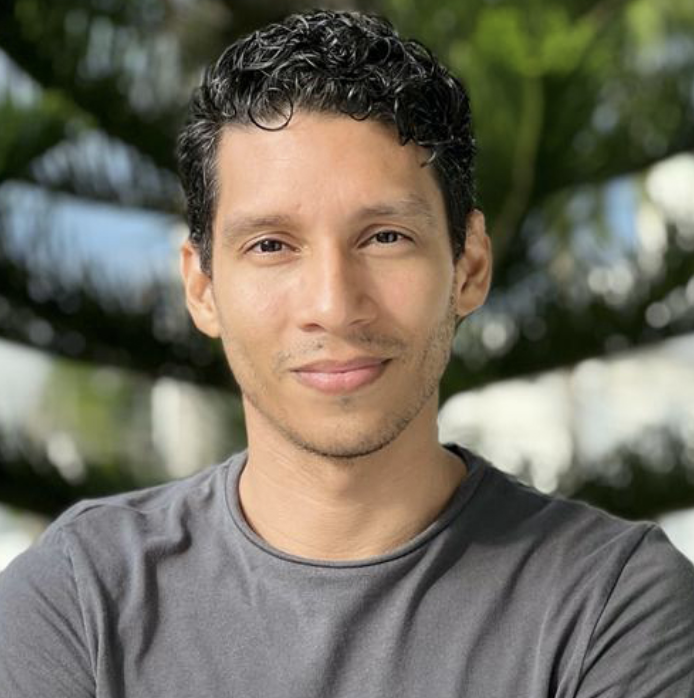
[00:00:05] Speaker B: Welcome to Lang Talent, the podcast by Multilingual Media exploring the human side of the language industry and the future of work. I'm Eddie Avieta, CEO at Multilingual Media. Today we are talking about a bold career move, designing and landing your own role. Our guest is Javier El Javi, df, newly appointed director of Community and Customer engagement at Smartlink. He pitched and created a function centered on human connection, customer momentum and community led growth. Javi, welcome to Lang Talent.
[00:00:42] Speaker A: Hello friends. How is everyone doing?
I'm glad to be the interview today and to be here with you guys. Like those who has probably seen this podcast know that I'm always interviewing so this is a great new experience for me and Eddie, I love the fact that you mentioned the exploring the human side of the industry. I have been doing this for at least six or seven years and I'm glad we are more, we are more showing human stories, showcasing the people who is the face and the experience behind the leader.
So I'm glad to be here, brother.
[00:01:20] Speaker B: That is fantastic. Javi, thank you so much. And of course you created your own role. Can you tell us a little bit about the spark what started this for you?
[00:01:29] Speaker A: Yeah, yeah, yeah, that's interesting. By the way, I'm wearing this Brazil shirt in honor of our industry father, Renato Beninato. Thank you for all you've done for us during these years.
So I started in the industry now 10 years ago. We were recording in 2025. I started in early 2015 and I was doing, I was developing a pure sales role, basically like waking up in the morning, contacting people, traveling the world, trying to sell software, localization software.
I don't think I did a bad job, I did a good job. But I was like, oh my God. It's very difficult for me to be at the level of the people I am talking to. I always need the help of a solutions architect or a very technical person. Right? When you are facing and talking to a localization industry expert, you need to be at their level. You need to be at their level. There is no possibility of overselling, bullshitting or things like that, right? You need to be there. And I was like, I'm never going to be there. So I'm going to need another 10 years of my life to get there. So I decided to do a little bit of retrospection and see inside myself what am I doing best that could help expanding businesses. And I said, I think I'm good at making friends, connecting humans, helping and bringing in products that I couldn't explain a lot, but that was the first.
The basics of it all. So I started firstly creating a role that I call global brand Champion to promote the brand, traveling the world, meeting people, telling them, hey, come and look at what we're doing. Then I developed the first community role some years ago during the pandemic, which were doing super cool, interesting webinars with a lot of following and overall connecting lots of the folks who were disconnected through, given the world situation back then. Right. And then now I'm in Smartlin smartly believes in community. So I'm here to develop that community and explore that human side, as you mentioned, man, and bring localization folks together.
[00:03:27] Speaker B: That's really cool, Javi. Thank you so much for sharing it. And of course, we didn't notice your. And you told us off the camera. 1998, Aldo Jewel Nazaria. For those that are listening, Javi is wearing a Brazil Official Jersey. Official 1999. Ask him how much he paid for it.
[00:03:49] Speaker A: No, don't ask me because this is. Don't ask those questions. This, this, like, if you are into football, what Americans call soccer, I'm blinking at the camera, like, you see the evolution of the materials of the shirts, and this is heavy. This feels like the 90s. It feels like the 90s, right? Like, I can hear Oasis on the back here.
[00:04:13] Speaker B: Still buy a house.
[00:04:14] Speaker A: Yes.
Oh, God, man, that's not good.
[00:04:20] Speaker B: Good.
[00:04:21] Speaker A: Millennials that generation, brother.
[00:04:23] Speaker B: Yes, good, good. How do you. And. And you know, we're really happy to. To be able to talk in depth about community and yeah. Something that. That others have. Have mentioned in our previous conversations. You. You rightly so pointed out that, you know, Marjolaine, in an interview last year that we highlighted on LinkedIn, she didn't say she didn't feel this was an industry. She felt this feels like a community.
So for you, Javi, how do you define that word? How do you define community? How do you define customer engagement or community engagement?
[00:04:56] Speaker A: Yeah, so community, I would say, is a group of individuals who share similar goals. Right?
So you come to the community to ask for information, to share experiences, to ask, hey, how did you achieve that to.
[00:05:16] Speaker B: To.
[00:05:16] Speaker A: To, you know, to get some shelter because it's very cold out there, so to say. Right? And community, it's in the mouths of most of the marketing. Right. Of the marketing people right now because it's a great way of helping, connecting, introducing solutions and telling people, hey, we are doing this this way. You want to see what we do?
So that's, to me, the definition of community. Right.
In my perception, not so many brands now in the localization industry are doing it. We at SmartLink, we believe in it, and it's a, it's the future for us to go. So that's where we are actively investing a lot of time and effort in developing those connections, those, you know, humanizing. Right. And helping connect, giving solutions. Right. So that's the project I recently started, man.
[00:06:04] Speaker B: And thank you, Javi. For those that are thinking at the company level and this is a new function, but for certain companies, something they might have thought about, it's something they have felt afraid of doing.
You have engagement within the company with marketing, with sales, with other departments in the companies.
How do you partner with those and what is some of the value that you think it adds to those other departments?
[00:06:32] Speaker A: Yeah, so. So one of the things that, that, that you tend to see in many companies is like departments are, they're, they're working great, of course, but, but they are, so to say, decentralized in communication. Could we call it that way?
So what I am trying to bring is to bring all those voices together and provide them with a platform to talk and to express what they're doing.
So engagement and you can really show engagement internally and leadership also. Right. And help others grow and communicate and show how valuable they are to others. Right. So I believe that's a good definition of engagement. I believe that's the project I am developing right now. And it's incredible.
I'm here for a few weeks and I'm seeing already some results and some attitudes of people like, oh, we want to collaborate, we want to participate, we want to do this. Right. Yeah, that's. That's how I would define engagement. That's how I would define, like, you know, because I think engagement has a lot to do with leadership too, as well. Like a leader is engaged, engages others. Right. And makes others better. So that's the, that's the way I see engagement.
[00:07:37] Speaker B: And I like that. I believe that when you're doing proper leadership, you are conscious of what's going on around you. And to be conscious about what's going on around you, you have to be engaged. There's.
[00:07:48] Speaker A: There's no way to do that and empathetic or use a lot of empathy as well. Like there's people who naturally, who are natural leaders, there's people who have incredible ideas to share, but they, for some reason, for their own experience, it's more difficult for them to show, to broadcast your ideas, to share them. Right. So you understand them with Empathy. With empathy, you tell them, hey, I've done these things. How could I help you, given your circumstances, to get to the next level of communication, to be engaging? Right. So, yeah, empathy is always there. I've always been preaching for empathy since I started because it's difficult. I always preach for it, but sometimes I feel like, why wasn't I empathetic enough also?
[00:08:35] Speaker B: Right.
That makes sense. And as we're talking about all these things, we are in a way demystifying through your concepts what, what all these things are, Right, like what community is, what customer engagement is.
Could you tell us a little bit more?
You know, we like gossip as well. So tell us a little bit more about what are some of the things that you are planning on doing now with a smartlink, like what sort of events you're going to be attending, what sort of stages are you going to be creating for. For those conversations to take place?
[00:09:10] Speaker A: Yeah, yeah, yeah, yeah, yeah, sure, sure. Like, there was a.
My friend said one day about gossip in the localization industry. If Javi doesn't know it, it didn't happen anyway, jokes aside.
So we are. It's the early stages of my tenure at Smarting. I started like three, four weeks ago.
But we're planning from working with influencers. I don't want to call them influencers. To me, influencers is something else, something different. Right. Working with influencers, influential figures within our community to spread the reach, create content, help them be in front of audiences they couldn't get before.
Create content around that. That's a project creating a platform for our, for the community to come and talk, to gather. We're also working on creating podcast. We have something that is incredibly cool that has been done by Smartly and our community dinners. We travel to a city around the world, we invite people, they come in, we have, we make them have a great, great experience.
The most important talk between themselves, share not only how great smiling is, of course, but share what their pain points are. You know, talk. People that are customers. People that are what, I don't know, people call them prospects. I don't like to call anybody a prospect.
Somebody that we could help as well. Right. Come and talk, relate, make new connections. So that's also on the, on the agenda. We, we are doing incredible events, bringing our customers together as well. Let them talk.
So, yeah, that's. This being the first two weeks, those are the most exciting things we're working on right now.
[00:10:50] Speaker B: That's really good. And you know, given that it's the very beginning of that Conversation. I think it's super relevant especially as we will have conversations in the future about the successes that you will experience at SmartLink. Can you tell me what if anything are you are it's going through your mind in terms of like the feedback that you're hearing from the partners that SmartBean has no clients, community partners.
What feelings are you getting out of those conversations?
[00:11:18] Speaker A: Yeah, yeah. So first of all like to me and I've worked in other tech organization, tech providers in the industry, I haven't heard from customers such great feedback about what we are doing and what we have developed. This is incredible. This is a whole different league. This is champions league for me.
So that's the first thing I've noticed during these first few weeks. First impressions after talking to people, people are seemingly engaged in what we're doing. Right. So that's my first impression. Then the internal camaraderie and family, so to say. I'm extremely, super positively surprised. Leadership is also comes from technology backgrounds. Leadership is extremely empathetic. You should see like our internal calls are like helping each other. I'm super surprised. Right. I'm super positively surprised by this. So this would be the, the few things that I will say I'm surprised with smiling these first few days. Right. So yeah, and this is true, this is not paid content. This is what I feel it's good.
[00:12:22] Speaker B: To hear as well. I wouldn't expect expect you to say.
[00:12:26] Speaker A: I haven't been specifically paid to say that. This is my real impression and I'm like wow, why wasn't I here before?
[00:12:35] Speaker B: And Javi, of course you mentioned yourself, you know, selling technology has changed over the past few years.
Could you tell us about the impact that community building has on, you know, helping the adoption of technologies before you know, a salesperson comes to you, you are engaged in many different way waits to learn about, you know, what the companies are about.
[00:12:59] Speaker A: Yes, well, I believe that in a so close and tight knit industry like ours, community definitely helps in the sales of software services.
Like you guys are doing as well with working with multilingual with all your family.
I think having the presence and the brand and that human touch in the age of AI and high tech is a key thing. You know one of the things in my experience and I spoke with this with friends with our industry dad, Renato Veninato as well.
I want to send all of the Zaki Brazil, Brazil.
So he always mentioned the importance of, of, of of serving, of helping, of connecting for business. He's been one of my best mentors ever in these last 10 years.
Always mention that community and those three, four skills or attitudes that you should have towards doing business are tight and close. So I believe exercising those and putting them to work towards prospective clients. I said prospect again and I don't want to say that more in public at least, really helps doing business branding as well. How do you present yourself? What's the story you're telling?
[00:14:21] Speaker B: Right. And this is something that you talked about when we were in Vamos Juntos in Mexico and in your workshop about personal branding. And of course there are the technical elements of all of this. Correct, like yeah, the posting, the recording, the calling things by what they are, but there is also the essence. And you're really pointing out that you are finding substance in SmartLink. You're finding a connection with your principles and with your values. How important is it to find that in a company and then align those with the principles of those that you are partnering with outside the company?
[00:15:02] Speaker A: It's interesting that you mentioned this. Yesterday, participating in a community panel organized by our friends Fabiano Seed and Stefan Huy, we had a thousand people who signed up. Like we were reviewing some statistics Today we had 300 people that were following our event live. Over a thousand views in less than 24 hours of the recording. And this is incredible. This means that, that branding, that creating content, that connecting people, the integrating yourself in the community, it's working. It's what people are looking for right now. Right. It was a great talk between eight, I think it was eight experts in the industry.
We had discussions around the uses of social media, the importance of community trolls, rumors that are going around, etc. Right. Things like that. No. And to me, that showcases the importance of branding and community and precisely, smartlink is a company in a brand that has, that is the core, in the core. And we're developing these precise principles to be integrated and known as one of the community event orchestrator, knowledge orchestrator and helpers. Right. And this is, this is key for me.
I found the, the dream job.
[00:16:14] Speaker B: So to say that that's, it's, it's good to hear. It's good to hear that this, that this provides.
[00:16:19] Speaker A: I'm passionate about what I do, Eddie as well, and I wouldn't be working in something that doesn't fulfill my passion. Right. I like the high energy, I like to help, I like to be there. Hey, come on, let's do this. If this doesn't work, we try, let's try, let's try something different. And I think attitude is the Key to life. Right. And to. And not only to professional. To the professional part of your life, but to life in general. Right.
[00:16:42] Speaker B: So that's really great to hear, of course, Avi. And to me, it's also very important to allow to give the audience the opportunity to understand direction. And you've been really good at showing kind of like, what drives that direction that you have taken in terms of the technicalities of it. Is there a way that you would recommend someone who wants to work in community or building their communities? There's maybe a company right now that says, you know what? That's exactly what we should do at our LSP or even larger companies.
What are some of the. Some of the indicators, some of the metrics, some of the things that they should look into to say, okay, it looks like this is the right direction to go? What would you measure? Or what do you measure?
[00:17:25] Speaker A: So, for example, the first thing I would recommend is, like, you need to find an orchestrator of this all and find a person who is sympathetic enough to connect with the outside community, and that can help the internal colleagues as well shine and participate. That's, to me, the first indicator of success, having somebody that is able to run this type of project.
Then I think it's a lot of collaborating and showing your humanity as well. I believe it goes in that direction in any way. And how can you measure this? Well, by doing things like, for example, how many connections with people in an empathetic way have we had? Like, how many events did we attend to that we showed participation in that community?
Like, how many people have we interviewed towards the end of.
Sorry, in a certain space of time? Right. Things like that. Like, there's leading and lagging. Right. Things you can control and things you cannot control. But if you focus on things like that, you definitely. You will be successful. Like, I have no doubt about that. Right. And it's super interesting. Like, back in. During the pandemic, I signed to be a salesperson in an LSP called La Claro. And, okay, so during the pandemic, we identified, like, hey, there's no, like, everyone is disconnected here. And some people are trying to do webinars. Let's do our own webinar. But we're going to do it with this couple of, of nuances. First of all, we do not talk processes or technology. We talk the human part of the industry, and we bring. We bring stories, right? So we brought. We brought leaders to talk about millennial problems. Look, millennials, my generation, man, we've been through. Through two major World crisis. And we survived. We spoke about the perspectives of leadership from the LGBTQ community too. We talked about the importance of female leadership, things like that. Right. Things that when we started the project, we had no idea we're going to do. And the following was massive, was really massive. And you know what the best part, you do this, of course, to expand the business. Right. So the audience was the correct audience. That was the part that really I would highlight the most. Right. Oh. In terms of measurements and how you measure, you tend to set at the beginning guidelines to measure success, and at the end you have others. That's my experience. It's like, oh, my God, we didn't think about these things. It's pretty new as well to me in doing community marketing in our industry and community connecting, so to say. And yeah, so we set some of, some of the metrics. We can measure it. And along the way you adapt. Right.
[00:19:58] Speaker B: So that's really valuable. Thank you for sharing the way you're doing it, Javi. Because when you are the cutting edge of things that you're trying and of knowledge, sometimes it's very difficult to define what it is that you need to measure. And if you are confident that you are going in the right direction, then that's already the best thing that you can do. Because, you know, despite what the numbers might be saying, your engagement, it's growing in other places. We're coming to an end of the conversation, of course.
Your final thoughts on the conversation, on community, on technology or on engaging on conversations?
[00:20:38] Speaker A: Yeah. So a lot of times people ask me about this precise question. Right. And I don't know why, because I'm just a human trying to figure things out. But if I think in community and marketing, in community, I think of one or two things. The first one is help help others and try to connect. This will eventually be good as personally and for your business. And I always try to tell people to serve, serve and serve. Especially when you are facing those who need it. Those who could become your customers or those who are your customers. Right. So serve, serve, serve, connect, connect, connect.
[00:21:18] Speaker B: That is fantastic. Javi. Thank you so much for.
[00:21:21] Speaker A: You're welcome, mate.
[00:21:22] Speaker B: Yes. Joining us today in this conversation. Well, thank you for listening to Lang Talent. Huge thanks again to El Javi Diaz for showing how to architect a role around people purpose and measurable impact and for mapping a community led growth blueprint. Others can adapt to catch new episodes on Spotify, Apple Podcasts and YouTube. Subscribe, rate and leave a review so others can can find the show. I'M Eddie Arrieta with Multilingual Media. Thanks for listening and we'll see you next time.